
Valuable 5 Pence Coin Error: Is Your UK 5p Worth More Than 5p?
Quick answer: A valuable 5 pence coin error is usually a genuine Royal Mint production mistake, not normal wear. The most searched example is the 2008 5p coin with a rotated or upside-down Queen’s head. Other valuable 5p errors include off-centre strikes, clipped planchets, broadstrikes, wrong-metal coins and clear double strikes.
Do not clean the coin. Take sharp photos of both sides, check its weight and rotation, compare it with a normal 5p, then check sold prices before listing it online.
Expert Summary:
The most valuable 5p error coins are those with visible, repeatable minting mistakes. A coin that is only dirty, scratched, bent, stained or worn is usually not valuable. A genuine error should be unusual, measurable, photographable and preferably confirmed by a coin expert, auction house or grading service.
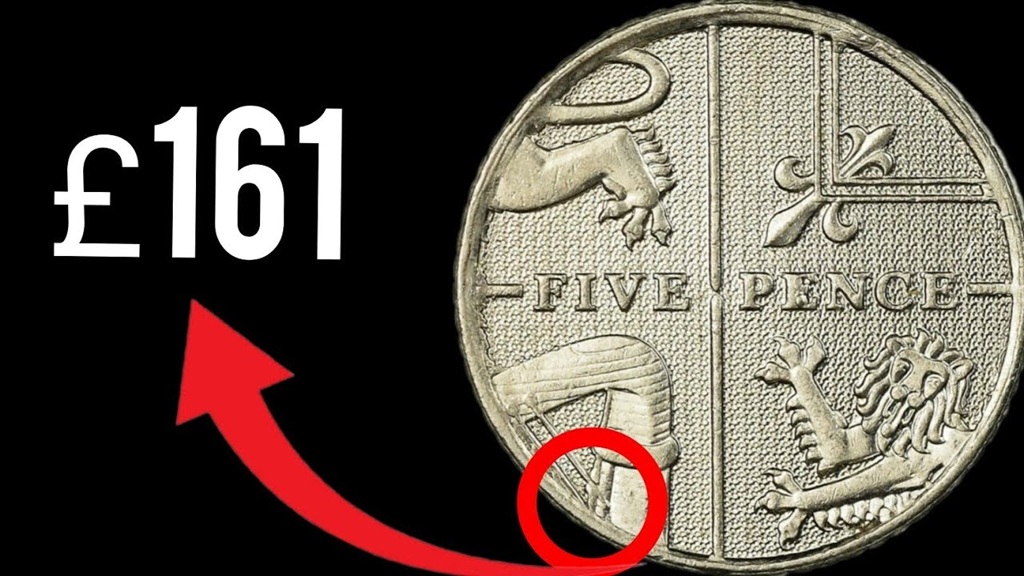
What Makes a 5 Pence Coin Error Valuable?
A UK 5p coin becomes interesting to collectors when the mistake happened during minting. The value depends on rarity, eye appeal, condition, demand and proof that the coin was not damaged after leaving circulation. A dramatic error that is easy to see will usually attract more attention than a tiny mark that needs heavy magnification.
Knight Online – Error OTP Login Failed with Unknown Issue Please Contact Customer Service
Most Talked-About Valuable 5 Pence Coin Errors
1. 2008 5p Coin With Upside-Down Queen’s Head
The 2008 5p error coin is popular because collectors search for a rotated die mistake. To check it, hold the reverse side upright, then flip the coin over from left to right. On a normal UK coin, the portrait should remain upright. If the Queen’s head appears upside down or strongly tilted, the coin may have a rotation error.
2. Wrong Metal or Wrong Planchet 5p Error
A wrong-metal 5p is one of the most exciting error types because the coin may have been struck on the wrong blank. Signs include unusual colour, incorrect weight, wrong thickness or a strange magnetic response compared with other 5p coins from the same period. These coins need expert checking because plating, staining and damage can fool beginners.
3. Off-Centre Strike 5p Error
An off-centre strike happens when the blank is not correctly positioned during striking. Part of the design may be missing, and the border may look uneven. The more dramatic the off-centre strike, the more interesting it may be to collectors, especially if the date is still visible.
4. Broadstrike 5p Error
A broadstrike can make the coin look spread out or wider than normal because the collar did not hold the blank correctly during striking. Genuine broadstrikes usually have a smooth expanded look, not the jagged appearance of a damaged coin.
5. Clipped Planchet 5p Error
A clipped planchet error looks like a curved bite has been removed from the coin before striking. The missing part should have a smooth curved shape. A random cut, dent or rough edge is more likely to be damage.
6. Double Strike or Die Clash 5p Error
A double strike may show a second impression of letters, numbers or design details. Die clash marks can show ghost-like details from the opposite side of the coin. These are harder to identify, so clear macro photos and expert review are recommended.
5-Minute Home Check: Is Your 5p Error Real?
- Check the date: Note the year clearly, especially if it is 2008 or another year with unusual features.
- Check rotation: Hold one side upright and flip the coin left to right. Look for an upside-down or tilted portrait.
- Measure the coin: A modern small 5p should be about 18.0mm wide and 3.25g in weight.
- Use a magnet: Later nickel-plated steel 5p coins are magnetic. Older cupro-nickel coins are not normally magnetic.
- Look at the rim: Real mint errors usually have a natural rim and surface. Rough cuts suggest damage.
- Photograph both sides: Use daylight, a plain background and close-up shots of the date, rim and error.
- Compare with sold listings: Look at completed sale prices, not only active listings.
- Get expert confirmation: For a major error, contact a reputable coin dealer, auction house or grading service.
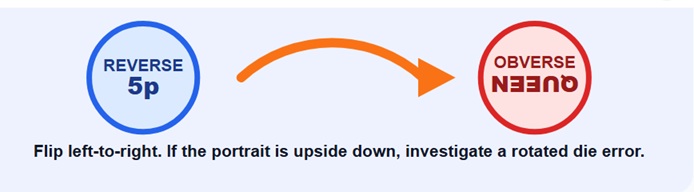
Flip left-to-right. If the portrait is upside down, investigate a rotated die error.
UK 5p Coin Specifications to Compare
Source note for editor: specifications are based on The Royal Mint’s 5p coin design and specification information.
How Much Is a Valuable 5 Pence Coin Error Worth?
The honest answer is: it depends. Many 5p coins advertised as “rare” are worth only face value because they are scratched, dirty or damaged. However, a clear and genuine mint error can attract collectors, especially if the coin is in good condition and the mistake is easy to prove.
Expert Tip:
When checking value, search for the exact coin type plus the words “sold” or “completed listing.” A coin listed for £500 is not proof that it is worth £500. Sold prices are more useful than asking prices.
Genuine 5p Error vs Damaged Coin
How to Photograph a 5p Error Coin for Selling
Good photos can make the difference between being ignored and getting serious collector interest. Place the coin on white paper near a window. Take one photo of the reverse, one photo of the obverse, one photo showing the coin beside a normal 5p, and one close-up of the suspected error.
Photo 1
Full front side with date readable.
Photo 2
Full back side with denomination readable.
Photo 3
Side-by-side comparison with a normal 5p.
Photo 4
Close-up of the error, rim or rotation angle.
Where Can You Sell a Valuable 5 Pence Coin Error?
You can sell a genuine 5p error coin through online marketplaces, coin dealers, specialist Facebook groups, auction houses or numismatic forums. For a common minor error, an online listing may be enough. For a dramatic wrong-metal, off-centre or certified error, a reputable coin auction or dealer may give better credibility.
Seller Warning:
Never claim a coin is a “Royal Mint error” unless you are confident. Use careful wording such as “possible rotated die error” or “suspected mint error” until it is verified.
Best Listing Title for a 5p Error Coin
If you plan to sell, your title should be specific and honest. Avoid exaggerated claims like “worth millions.” A clear title helps real collectors find your listing.
Example title:
2008 UK 5p Coin Possible Rotated Die Error – Queen’s Head Upside Down – Clear Photos
FAQ: Valuable 5 Pence Coin Error
What is the most valuable 5 pence coin error?
The most searched valuable 5p error is the 2008 5p with a rotated or upside-down Queen’s head. Other potentially valuable errors include wrong-metal coins, off-centre strikes, clipped planchets and broadstrikes.
Is every 2008 5p coin valuable?
No. A normal 2008 5p coin is not automatically valuable. It needs a clear minting error, unusual condition or collector demand to be worth more than face value.
How do I check a 5p rotated die error?
Hold the reverse side upright, then flip the coin left to right. If the portrait on the other side appears upside down or strongly rotated, the coin may have a rotated die error.
Should I clean a rare 5p coin?
No. Cleaning can scratch the surface and reduce collector value. Keep the coin dry, handle it by the edge and store it in a small coin holder.
How do I know if my 5p coin is damaged or a real error?
A real mint error usually has natural metal flow and a consistent struck appearance. Damage often looks rough, scratched, bent, cut or chemically stained. If the coin looks unusual, compare it with a normal 5p and ask a coin expert.
Final Verdict
A valuable 5 pence coin error is rare, but it is possible to find one in change, old jars, coin boxes or inherited collections. The key is to separate real mint errors from ordinary damage. Start with the 2008 rotated die check, then inspect for off-centre strikes, wrong metal, clipped blanks and unusual weight. If the error is clear, do not clean it, photograph it carefully and get a second opinion before selling.
Found a Strange 5p Coin?
Check the date, rotation, weight, metal and rim before spending it.

Pingback: Error SP-POST-4003-1002 ZEE5 Fix: Quick Working Solutions for Mobile, TV and Web - Seminarsonly.com